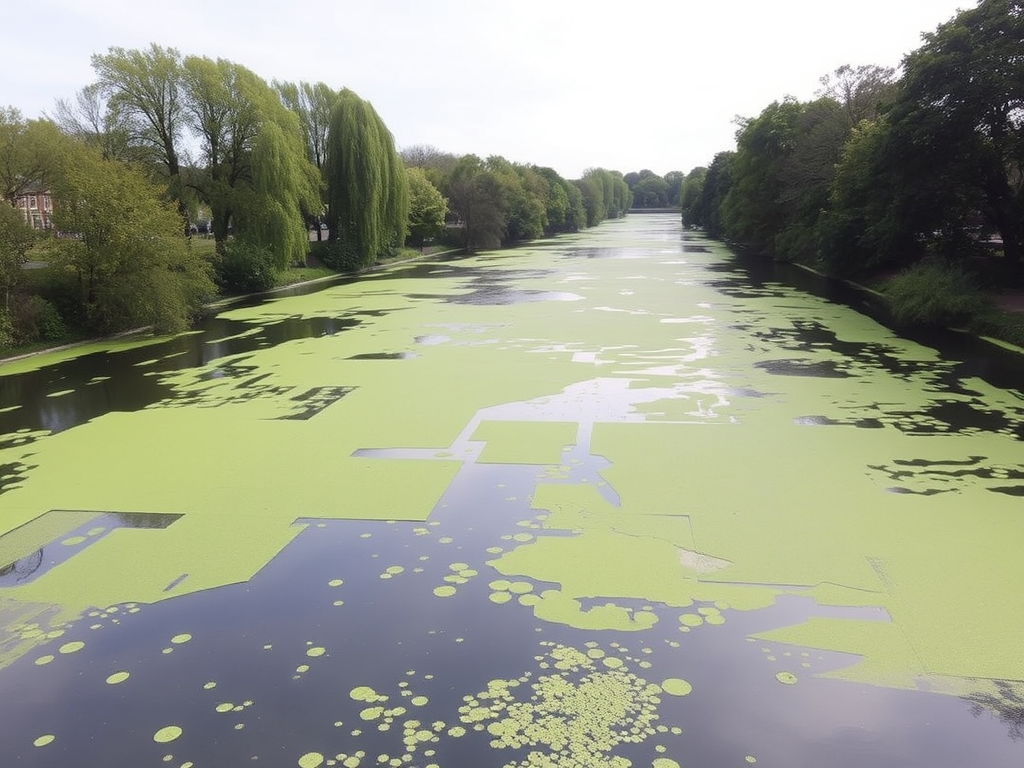

Haringey’s own River Lee may not be as large as Lough Neagh in Northern Ireland, but residents here are all too familiar with the issue of algae blooms affecting our local waterways.
This summer has brought another round of noxious blue-green algae blooms to Haringey’s much-loved parks and green spaces. While this problem is not unique to our borough, it’s a reminder of the challenges faced by bodies of water like our own River Lee.
In Northern Ireland, Lough Neagh, the UK’s largest freshwater lake, has been struggling with algae blooms for three summers in a row. This has led to disruptions in eel-fishing season and bathing advisories at beaches near the Lower Bann River.
Andrew Muir, Stormont’s Agriculture, Environment, and Rural Affairs Minister, has stressed the importance of taking sustained, long-term action to help Lough Neagh recover. While progress is being made with 14 out of 37 proposed actions already implemented, it’s clear that significant recovery will take time – perhaps even decades.
The issue of pollution in our own waterways here in Haringey is also a pressing concern. Strengthening regulations and enforcement around sewage pollution is crucial to protecting our local environment.
Climate change has only made matters worse for Lough Neagh, with record-breaking temperatures exacerbating the problem. This underscores the importance of tackling climate change through initiatives like the Climate Action Plan.
Mr. Muir has highlighted the vital role that farmers play in improving water quality and has called for support in implementing measures to help them transition towards more sustainable practices.
As residents of Haringey, we can all do our part to support our local environment. Whether it’s through adopting sustainable habits or advocating for change, we can work towards ensuring the health of our own River Lee and surrounding waterways for years to come.